Wednesday, February 28, 2007
NW WIND 20 TO 25 KT WITH GUSTS TO 30 KT. WIND WAVES6 FT. W SWELL 12 FT AT 12 SECONDS.
Pretty remarkably short board given the era...probably the 1930's. Tom Blake is one of the pioneers of modern surfing.
Thomas Edward Blake was born in Milwaukee, Wisconsin, on March 8, 1902. In 1919, Tom Blake headed west. He adapted to life on the California beaches easily and was considered a "natural" waterman and became a world class swimmer, racing against legends like Duke Kahanamoku and Johnny Weismuller aka "Tarzan".
Working as a lifeguard at the Santa Monica Swimming Club in 1924, Blake found an old surfboard being stored and paddled out into the surf, getting his first successful ride...and apparently the surfing bug. Tom traveled to Hawai’i that same year to surf in the warm water, and would, over the next thirty years either live in or travel to, Hawai’i every year.
In the 20's and 30's surfboards typically weighed between 90 and 150 pounds, with some of the Hawaiian 16-foot long Olo boards weighing as much as 200 pounds. In an effort to eliminate weight Tom Blake designed and built his first hollow board in 1926. This board was a redwood plank with hundreds of holes drilled through the deck then layered with a thin sheet of veneer, top and bottom.
The next evolution of the hollow board involved carving chambers in the hull. And finally, Blake utilized a transversely braced hollow hull, using ribs for strength, much like an airplane wing is built. This resulted in a sturdy 40 to 70 pound board, depending on length. These hollow surf and paddle board soon could be found worldwide.
From the 30's to the early 1950s, Blake's hollow boards were produced by manufacturers like the L.A. Ladder Co. and the Catalina Equipment Company. His hollow paddle rescue board was later adopted by the Pacific Coast Lifesaving Corps and used by the Red Cross National Aquatic Schools for instruction. Blake's rescue paddle boards were used on many beaches where lifeguards were employed.
In 1928, Blake won the first Pacific Coast Surfriding Championships at Corona Del Mar, California, using his hollow surfboard. He is considered the first surfer to ride the waves at Malibu. In 1930, he built the first waterproof camera housing for surf photography. In 1932, he started the Catalina Paddleboard Race and took first place. In 1932, he also invented the sailboard. In 1935, Blake placed the first fin on a surfboard and wrote his first book, "Hawaiian Surfboard". Soon after he wrote "Royal Hawaiians", and in 1959, authored "Hawaiian Surf Riders". His final book appeared in 1969, "Voice of the Atom".
Tom Blake was recognized by the National Surf Life Saving Association of America for his contributions to aquatic safety and his personal accomplishments in ocean lifesaving. Their statement, "And most important, the thousands of lives saved because of his inventive contributions in the interest of fellow human beings" pleased Blake immensely.
Tom Blake was a complex, intensely creative yet simple-living man, and is considered to be one of the most important watermen of 20th century. He passed away at age 92, on May 5, 1994, in Ashland, Wisconsin.
~adapted and condensed front the California Surf Museum website...
Tuesday, February 27, 2007
Monday, February 26, 2007
Sunday, February 25, 2007
In the the shadows of headlands...
The glare of the sun...
All are reason for celebration and utilization...
Saturday, February 24, 2007
Friday, February 23, 2007
W WIND 15 TO 20 KT...BACKING TO SW.GUSTS TO 25 KT IN THE AFTERNOON.
WIND WAVES 2 TO 4 FT.
W SWELL 12 FT AT 13 SECONDS.
After a lengthy hiatus, the OB surf blog "Niceness" is back on line. The blogger E indicated that the bad vibes from certain individuals was the reason for his discontinuing the report.
I was thinking about this last night...clearly, the internet, with its forecasts, webcams, e-zines, message boards and blogs, is here to stay. The vocal minority that resents the presentation of this information won't stop it with cyber threats. Just to be clear, I don't necessarily appreciate or approve of individuals providing detailed, specific information on spots that it took years to get wired. I also have seen the increase of people in the water over the past decades. However, I have seen this increase over more than just the past 10 years...it's just that it has accelerated. I'm sure the internet has added fuel to the fire...but no more than the proliferation of surf mags, media exposure and the mainstreaming of surf culture in Midwest malls.
In any case, on any day of the year that there is surf in Oregon, I can choose to paddle out at a spot that is empty or I can opt for more crowded, popular breaks...and complain about the crowds of newcomers if I wish.
Thursday, February 22, 2007
Wednesday, February 21, 2007

...but still macking!
S WIND 15 TO 20 KT.
WIND GUSTS OF 25 TO 30 KT DURING THEAFTERNOON.
WIND WAVES 4 FT.
NW SWELL 20 FT AT 14 SECONDS...EASINGTO 15 FT.
After a "weak"end of no surf...and then a quick trip down yesterday to continued windblown slop...it's nice to see things cleaning up a bit. Not that I can take advantage of 20 foot sets at 14 seconds...I have my standards...errr, limits...errr, fears.
I had lunch with friends yesterday and inevitably talk ran back to the unbelievable run of surf in late January and early February. We reminisced about perfect overhead lefts peeling into calm channels, sketchy rock entrys and exits, and other Oregon surfing exploits...then groused about how crappy it was.
Tuesday, February 20, 2007
My nephew was a teenager and was just learning to surf, even in 1992 there were relatively few midweek surfers out so we largely had the waves to ourselves. The surf wasn't too big and we just hung out on the beach when it wasn't pissing rain, surfed when we wanted and hunkered down at the campsite when we were hungry or the downpour was too intense.
Some coworkers of mine were on a "retreat" in Seaside on one of the nights we were down, staying at a hotel there. So I fed the kid and headed over to town to see what was up. The retreat in question was an effort to consume as much alcohol as humanly possible and apparently they were being highly successful. I partook for a bit, but headed back before I regretted ruining my planned next day of surfing.
By Friday we were pretty "camped" out, so we consolidated our stuff and packed some of it up to the car. We surfed all day in the rain that seemingly never let up. The surf was definitely the best on that last day as I recall, great rights off the the south end that deposited you into the rip for the escalator ride back out in the rip. We knocked off about 3, went back to the camp, ate a late lunch and packed up the rest of our stuff. As we loaded the final wheelbarrow load a couple with surfboards walked by..."You leaving?", they asked. "Want the tarp?", I asked. They eyed the swamped out campsites everywhere and then looked at our now completely dry site and said, "Yeah!"
Monday, February 19, 2007
Sunday, February 18, 2007
Saturday, February 17, 2007
Some of the early surfboard shapers in Oregon in the 1960's were Bob Jensen, Jim Sagawa, and Art Spence. And per legendary shaper Bill Barnfield, early Oregon shapers also included Dan Mathews and Jerry Harrington when he arrived around 1969 to surf a famed north coast left point and worked as a sander and polisher for Tillamook Head Surfboards (and later, briefly, the Evergreen Surfboards label with Spence and Lanny Shuler in 1972).
Barnfield describes the boards that were being made as progressive in design and tailored for the point surf...thin, dome decked, slender-railed, and with a slight flip in the nose.
Friday, February 16, 2007

S WIND 15 KT.
WIND WAVES 4 FT.
W SWELL 12 FT AT 11 SECONDS.
A mountain on the North Coast of Oregon, was called "Neahkahnie" by the local Indians. The rough translation of Neah is thought to be "Home", while "Kahnie" was the name of their God...so "Home of Kahnie".
One of the primary Hawaiian gods is also named "Kane". Kane was the creator, the god of life and everything associated with life...including water, sunlight, and the winds. Kane was also the king and father of all Gods.
The Oregon North Coast Indians were renowned for their canoe building and ocean skills. As were, the Hawaiians...
Coincidence?
Thursday, February 15, 2007
Wednesday, February 14, 2007
Tuesday, February 13, 2007
Monday, February 12, 2007
Nineteen-year-old Bostonian Robert Haswell wrote the journal entries reproduced here in August 1788; they were published in the Oregon Historical Quarterly 140 years later. Haswell was third officer of the Washington, an American sloop under the command of Captain Robert Gray that had traveled from Boston to the Northwest Coast in search of sea otter skins.
Haswell’s entry for August 10 begins with a description of two Indian canoes that had come along side the Washington to trade otter skins in the vicinity of presentday Lincoln City. Haswell notes the cautious behavior of the Indians, who were probably Tillamook. He also observes that two or three of them had been scarred by smallpox, a highly contagious disease that was probably introduced by fur traders about ten years earlier. This reference and the reference to iron knives suggest that the Tillamook had previously encountered white trading vessels.
On August 14, a party from the Washington entered what was probably Tillamook Bay looking to buy otter skins. The Tillamook Indians were friendly at first, offering the scurvy-ridden sailors an abundance of berries, crabs, and salmon, as well as otter skins. Things turned sour two days later, though. A young man by the name of Marcus Lopez, a native of West Africa’s Cape Verde Islands, discovered that a Tillamook man had taken his cutlass, a short curved sword often carried by sailors. Lopez chased after the man, but soon found himself surrounded by a group of wellarmed Tillamook warriors, who quickly killed the unfortunate young sailor.
The other crewmen of the Washington, seeing themselves heavily outnumbered, ran to their longboat and paddled as fast as they could for the sloop, narrowly avoiding being cut off by Tillamook war canoes. The fur traders named the place Murderers Harbor in commemoration of what happened to Lopez, who was probably the first person of African descent to set foot in what would later become the state of Oregon.
Sunday, February 11, 2007
Saturday, February 10, 2007
Heading up coast I checked another rarely surfed open beach break that was usually blown to smithereens and found these head high rights reforming and breaking on an inside sandbar. Sometimes good things come to those who look...only good for about an hour, but better than the whole lotta nothing I had resigned myself too.


Friday, February 09, 2007
It may seem simple; we already have a unique and singular tie to the ocean, but does it carry over to a unified obligation and responsibility to protect and preserve this resource? Perhaps, but to what and to whom is the obligation and responsibility owed? Our children?, Ourselves?

Thursday, February 08, 2007
Jock Sutherland still surfs in Hawaii, winning Masters surf contests and placing highly even in open divisions. A standout surfer in the 1960's, he has been referred to as the Kelly Slater of his day, although perhaps you could argue that Slater is the Jock Sutherland of today.
Many classic stories abound of Sutherland's exploits...the most famous of all being his surfing huge Waimea Bay at night while tripping on a megadose of acid. Another surfer, Jackie Eberle, a stand-out goofy-footer wasn't as fortunate, he discovered one night by Jeff Hakman and Jock Sutherland in a catatonic acid trip from which he never returned.
Jock placed second to Nat Young on October 2, 1966 at the World Surfing Championships in Ocean Beach, San Diego. Surfing changed radically on that day as the day of the 10 foot, 30 pound log was sent to the scrap heap.
Half a decade later, the first Pipeline Masters was won by Jeff Hackman in 1971. This specialty event had only six competitors: Mike Armstrong, Jock Sutherland, Jimmy Blears, Jackie Dunn, Jeff Hackman and Corky Carroll.
Sutherland's classic style graced surf movies like Five Summer Stories and his standout surfing of 1969, considered by many as one of the best surf years of all time, is immortalized in Pacific Vibrations.
Wednesday, February 07, 2007
So why the need to return to the roots? Why not rely upon the leash? Why not utilize space age ultra light compounds in our surf craft? Would Miki Dora or Bob Simmons or the Duke admire our efforts to shed the advantages we are offered today or simply regard us as clueless kooks? I would guess the latter. I think we long for the old ways, seeing them as somehow superior, because we didn't suffer the chilblains, the surf bumps or the long swims of yesterday...and somehow we now see these trials as enobling; when, in fact, it was just the cold, hard, fucked up reality of surfing in the old days that none of us can even comprehend...and never will.
Because if it gets cold enough, or hollow enough, or big enough...we will layer on the 654, break out the well-rockered gun and strap on a quick release leash in an improved effort to take advantage of that which the pioneers could not. Technology in surfing has not changed radically over the last few years, but even the trivial improvements that have occurred bring us more safety and comfort than the call of nostalgia ever will. Not to mention that a long shitty swim in shivering cold water, after a blown late drop due to equipment shortcomings holds little appeal to me.
Tuesday, February 06, 2007
These prehistoric predators likely strike fear into any that encounter them. Even sitting safely high and dry, my heart had raced upon recognizing its form. The fact that the shark was a mile from a wave I had surfed not an hour before did nothing to reduce the pounding in my chest.
Sharks have been hunted relentlessly through the years, with a vengeance that springs from fear. The reduction in their numbers promises to tip the ecosystem into imbalance, as does the drastic reduction or addition of anything within any closed system.
...paddled out in the fog by my lonesome, hoping the outside wasn't as messy as the inside. Luckily it was nice outside. But I got vibed off my peak by a big ass sea lion. He didn't bark, but kept hanging out with me, popping the head up, and I pulled out of a wave he was in. Probably about a one ton sizer. The lion and the fog made me pretty skittish. I kept thinking, over and over, 'today is the day' for the worst of meetings--laid prone, wouldn't even dangle the feet. Then the fog lifted, waves shaped up a bit more, and a few others paddled out. Only in Oregon winter time are you thankful for other surfers paddling out to your peak. The vibe of the other folks was good, and everyone was stoked at each other's rides. All and all, good waves and a good wave count day for me.
~gills
Monday, February 05, 2007
Sunday, February 04, 2007
Due to this somewhat recent adjustment of surfing rules, any kook or val or serf may claim: "Dude...check out those waves!"...and then go surf them. This may be seen as progress or as regression; and where some may welcome and rejoice at this leveling, others will gnash their teeth and rent their clothes in seething anger. Clearly, sometimes it's good to be king...or at least a core local.
If your stoke is strong and the surf is up, there may well be many waves in your future. Frustration and struggle are surely in your future. Even after a short time, as you lay upon your surfboard, and gaze upon the undulating horizon in anticipation, you may find peace and bliss and harmony. With dedication to the art, you may even discover the meaning of soul.
The kings used to have surfing interlopers put to death; now the penalties are generally limited to milder stern frowns, maybe some stink eye, and a bad vibe or two. Occassionally, a rock may fly or a deer head may be left upon your porch...but these are rare occurences.
This sage advice has been offered on more than one occassion: Tread lightly, show respect and know your place in the lineup. I would add this: Speak neither too much, nor too little, lest you raise interest or suspicion...and the waves upon which you are now looking may yet remain unchanged.
Saturday, February 03, 2007
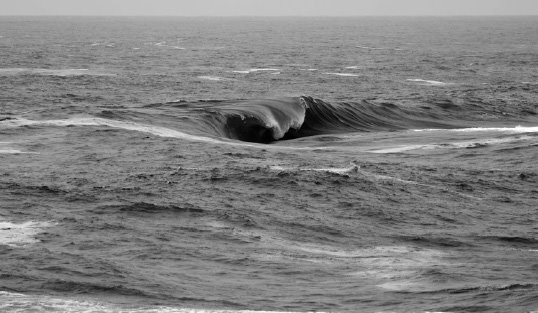
Look familiar?
It may or it may not...
I posted it 334 posts ago...
Or 365 days ago...
This pic...
Filched from E's Surf Report...
aka Niceness...
Out of San Francisco...
Which in my opinion...
Was arguably the best surf blog ever...
The pic itself...
Was from an online bodyboard site...
And if I recall correctly...
Had the simple descriptor of...
"Oregon"...
The pic was the source...
And the inspiration for...
Surf in Oregon.
Thanks for reading.
Doc
Friday, February 02, 2007
Thursday, February 01, 2007
single fin shortboards, paipos and Tom Morey's original boogie board.
I stand, and remember the past, but recognize the future as inevitable.